Showing posts with label tire pressure. Show all posts

Remember kids- SMOKE TIRES NOT DRUGS !!

Tire Rotation
Looking after your tires
The front and the back tires of your car perform different jobs and that is the reason why both of them wear at different rates. To ensure maximum tire life and to get rid of irregular wear patterns, it is really important to have regular tire rotation done.
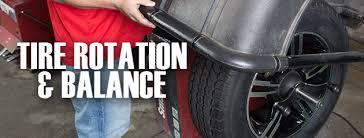
Earlier tire rotation was very straightforward. There were just two possible options- front to back or diagonally side to side. You must read the proper recommendations suggested in your vehicle’s manual or you can also take an advice from an experienced tire dealer. But if you don’t have all this information, then the information mentioned here would really assist you.
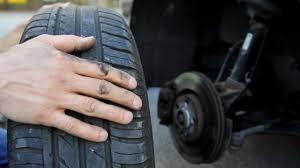
How frequently should tyres be rotated?
As per many manufactures, tyre rotation is recommended at least every 10,000km or more frequently if a lot of wear patterns are noticed. If a lot of wear patterns are recorded, then you must pay attention to wheel alignment, correct tyre pressure and should also revise your driving style. It can be very hard on front tires for the high powered front wheel drive. It could be necessary to rotate tires even more frequently to maximize their life.
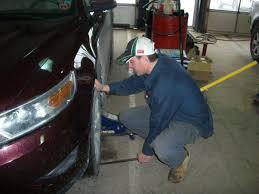
Uni-directional and asymmetrical tires
The tires which are primarily designed to turn only in one direction are known as uni-directional tires.
  • There is an arrow marked at their sidewalls, which indicates the correct rotational direction.
  • They must be correctly oriented.
  • You cannot rotate them side to side because this would alter their direction of rotation.
The standard tires have a same pattern, while asymmetrical tires pattern differ from side to side.
  • Its advantage is that different parts of it are designed in such a manner that they perform different tasks. Let us understand this with the help of an example. One part can be utilized for wet conditions, while another provides good concerning behavior.
  • This type of tires should be fitted to the wheels in such a way that they produce the intended benefits. They will have sidewall markings.
  • Generally front to rear rotation is recommended by most of the manufactures and they are against rotating asymmetrical tires side to side.
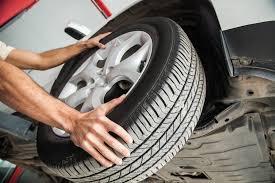

Different diameter or width tires
There are a lot of vehicles which have different front and rear tires. They differ in diameter as well as in width. This means that it is only possible to rotate them side to side on the same axle, provided that they are not uni-directional or asymmetrical tires.
Adding the spare wheel into the mix
It is a good practice to include this car part in the rotation sequence if it is same as the road wheels. The advantage of this is that it spreads the wear over five tires rather than four. The spare tire is also used up or else it would have been deteriorated over with the passage of time.
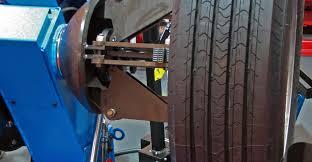
Temporary use or space saver spare
The temporary use or the space saver spare wheels only have a limited use. You cannot include it in the rotation sequence. This is a suggested rotation pattern if your vehicle doesn’t have uni-directional, asymmetrical or different size tires to rear.
Some other maintenance requirements through which maximum tire life would be achieved are as follows:-
  • The car tires are regularly rotated
  • Properly inflated tires
  • The wheel alignment and balance are checked and corrected if necessary.
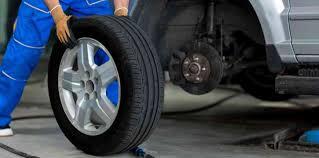

You should check the alignment annually or if any abnormal wear patterns appear. Make it a point to get your car tire pressures checked every week. It would be a wise idea to get your tire balancing done at regular intervals as it is inexpensive.

If your car tire has got damaged due to an accident, then you can buy  its parts online from https://partsavatar.ca/.  We offer all kinds of aftermarket auto parts which you won’t be able to resist. So what are you waiting for? Come visit our online store.

Ensure your car's safety by deploying TPMS in the tires. For more after market auto parts visit partsavatar.ca

Tires are under inflated? Ensure your safety on the road by deploying TPMS.
Car's Tire pressure monitoring system or TPMS monitors the pressure in the tire with the help of a wheel mounted sensor. Tire pressure monitoring systems have been a legal requirement on new cars since 2012. The sole purpose of these systems is to warn you if your tires are under inflated. The under inflated tires often offer a less stable ride and there are more prone to possible blowouts. The warning prompts the driver to inflate the tires to proper level. Drivers are advised to keep their vehicle’s tires inflated to the level indicated on tire placard.  You can easily locate placard on door jamb or glove box. TPMS often avoids major fatalities that could happen on high traffic roads or bad weather locations.

TPMS comes in different systems as direct and indirect TPMS. Let us know about these systems in detail.

INDIRECT TPMS

The circumference of under inflated tire is small. Therefore, Indirect TPMS of car uses existing individual wheel speed hardware.  This hardware supplies car’s anti lock and anti skid control functions in addition. This hardware identifies a pressure drop and alerts the driver through either illuminated fascia light or an on dash message.

Indirect TPMS relies on wheel speed sensors used by anti lock brake systems. The rate of revolution of the wheel could help the system to detect relative size of tires. An under inflated tire also causes a wheel to spin faster than usual, thus if detected, computer would generate a warning for it.
So, indirect TPMS don’t use electronic processing or any kind of instrument to detect the tire pressure. They just create their results of pressure detection on the basis of rotation of tire. Sometimes if a new tire is installed in a vehicle, it could relatively generate false rotation rate so sometimes the results of indirect TPMS may be inaccurate. These systems are less expensive than Direct TPMS but at the same time they are less precise as compared to direct one.  Less maintenance is required for indirect TPMS but this system has to be reset after every tire rotation or inflation.

DIRECT TPMS

Direct TPMS employs a sensor in each wheel and communicates with a separate transmitter. The Car's TPMSsensors employed can also provide tire temperature readings. This system sends the data to centralized control module where it is interpreted and analyzed. The indicator light illuminates as a signal for warning that your vehicle’s tire pressure is low. System easily distinguishes between the readings of each tire of the vehicle because each sensor is provided with a unique serial number. Though Direct TPMS is more accurate and popular as compared to Indirect TPMS, it requires more maintenance and is cost effective. Another advantage to this system is its battery is quite long lasting and there is no need to reset. It is a wireless system.

If there is some problem with the battery of the sensor, then this might not be good news because batteries are unserviceable and you will have to change the whole sensor. The sensor stem is also prone to damage basically in case of accidents.

MAINTENANCE AND REPAIR REQUIREMENTS

1. An integral battery is sealed within each sensor. Each battery has a design life of about 10 years or 100,000 miles. If one battery gets depleted the entire system has to be changed. The new part needs to be activated and then coded to the vehicle. This is quite time consuming and requires costly tools which are $140 per wheel.

2. Most sensors need a service kit that includes new sealing washers as well as replacement TPMS valve of car core. The whole sensor is not needed to be replaced whenever the tire is removed. Plastic caps are often used to protect core and sensor internals whenever the sensor is dismounted.

3. Corrosion also affects a sensor by damaging the stem causing small air leaks or complete deflation. But stems can be easily replaced without undergoing replacement of sensor because stems are affixed by small screws. If a TPMS sensor has been damaged by careless tire fitter, then it must be replaced immediately.

4. If your system detects fault, then you may need to replace your sensor.  By disabling TPMS, we cannot modify the sensors because it could alter car’s security system as well. So better have it changed than following a cheap route.

5.  The genuine OE sensors are less costly as compared to other sensors. Buying a genuine replacement sensor may be a viable option. You can also fit a good quality replacement sensor that can be programmed with old sensor’s unique identifier.

6. When the warning sign illuminates while driving, it means system has detected a tire low pressure than standard. As soon as the warning is generated, the tires should be inspected. When the tires are properly inflated, the warning lamp will automatically extinguish.

7. Experts say that 25 % of the vehicles have under inflated tires. Inflated tire not only results in poor driving experience or unsteady ride but also cause poor fuel economy, small tire life and longer braking distances.

8. It may be necessary to reprogram the TPMS when the sensor is installed or tires are rotated.

9.  Proper wheel alignment adjusts the angle of wheels thus correctly positioning the vehicle’s frame and  maximizing tire’s life

10. Tire must be replaced if tread depth is measured 2/32nds of an inch or less.
For more safety and TPMS equipments visit partsavatar.ca which deals in best auto parts across Canada.

Partsavatar.ca - Get All 2015 Acura TLX Parts

Find Best 2015 Acura TLX Parts Online at Parts Avatar Canada Acura likes to tout tech as the selling point of its mod...